


Discover how well your culture is performing.
4 intelligence layers. 26 proprietary algorithms. 1 cultural performance engine.
Leadership gains a clear view of where risk is building, what is working, and which priorities will strengthen culture and performance, managers get business-relevant action plans, and employees receive expert-led recommendation plans.
How the cultural health audit works
We gather data through four quick and easy assessments called Wellbeing Intelligence Layers. The initial audit sets a baseline measurement, the Cultural Health Index (CHI). Quarterly measuring then helps you quantify the behavioural signals, ROI and cultural performance shaping your organisation over time.
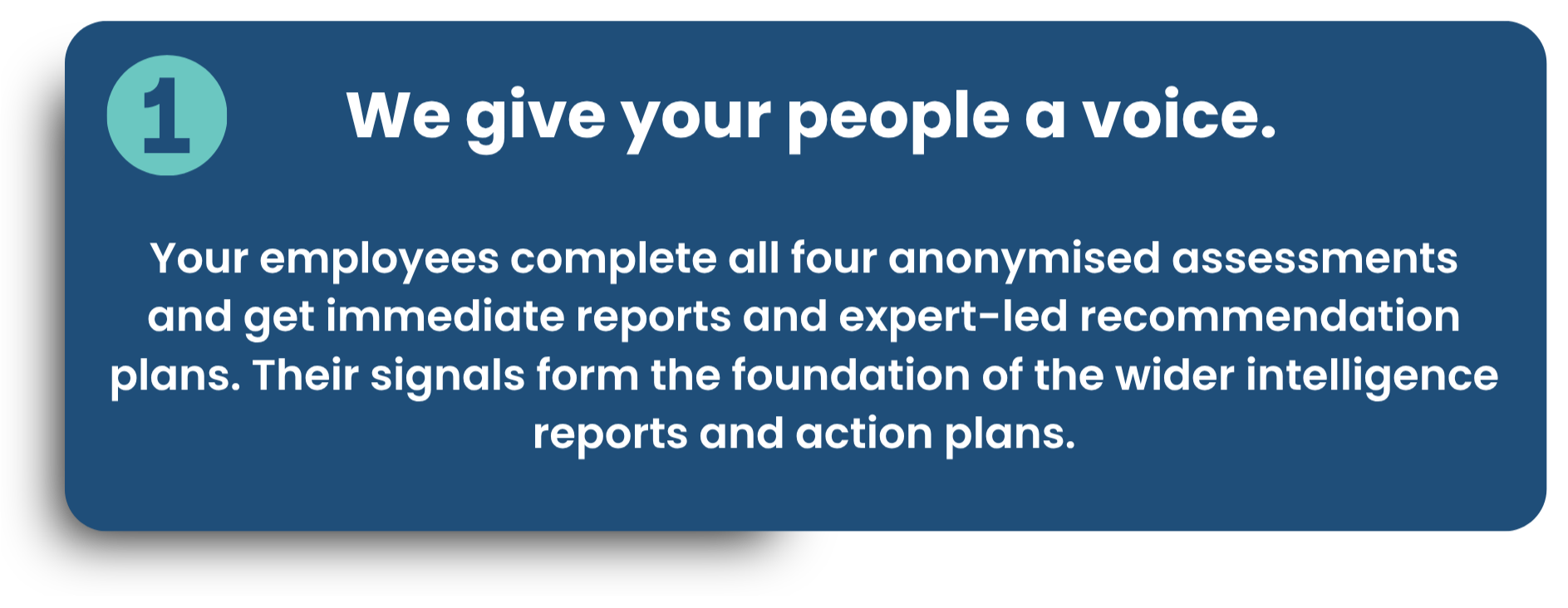
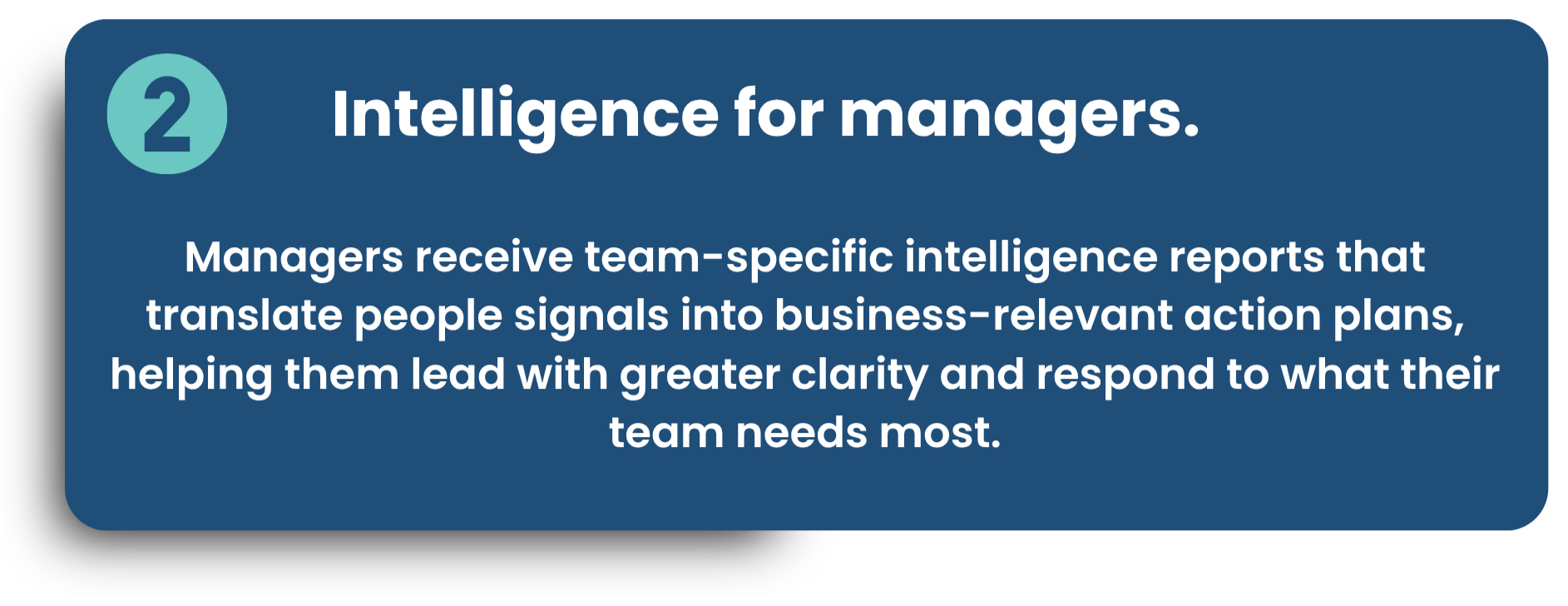
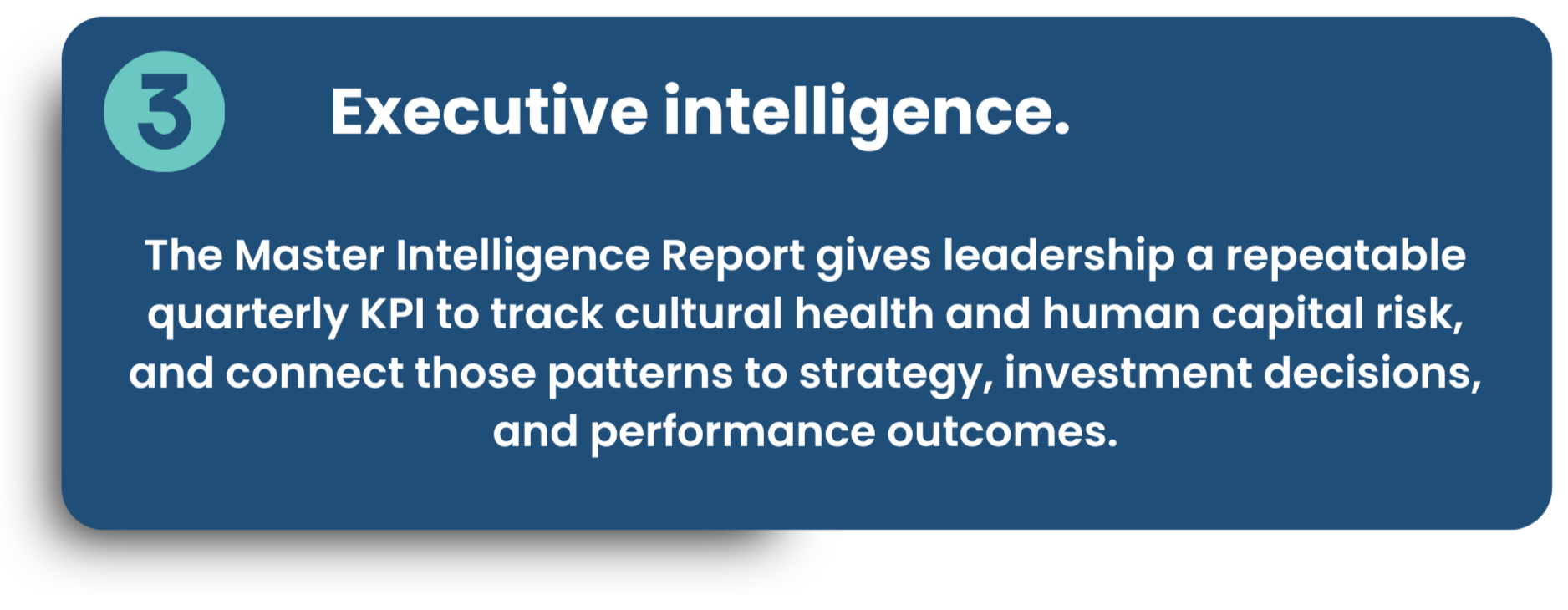
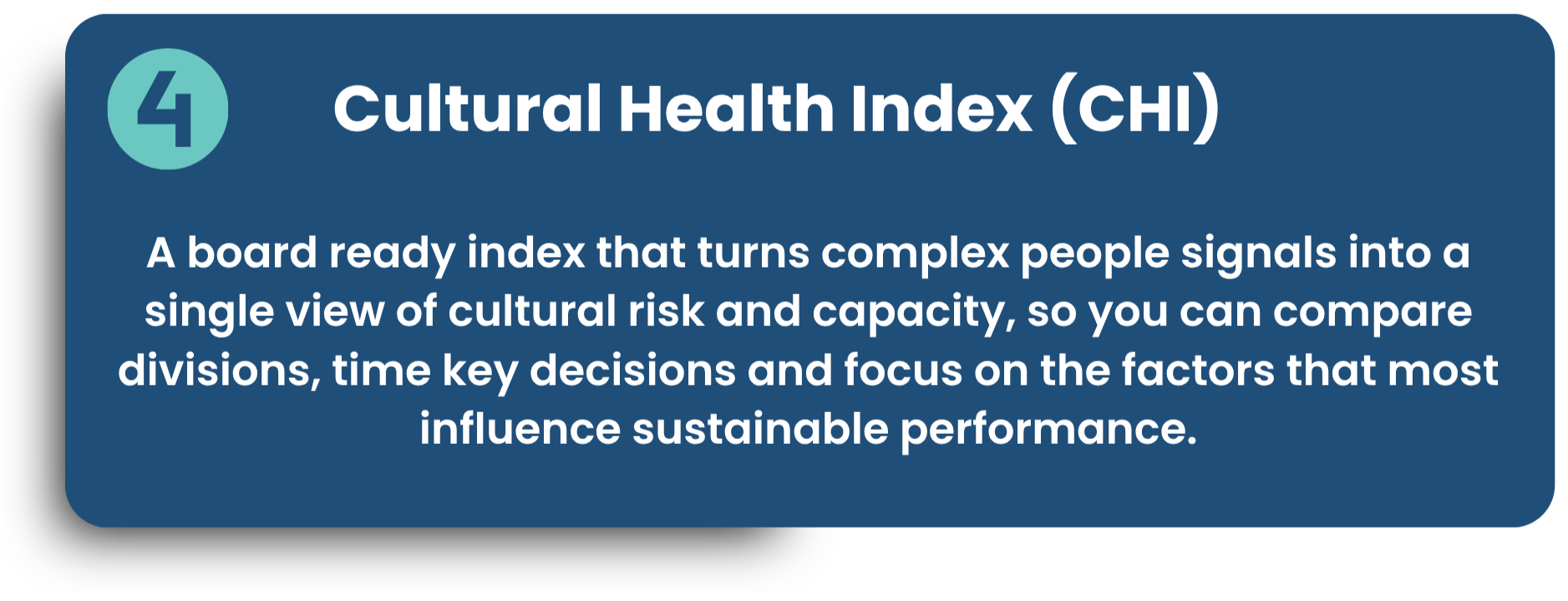

Four wellbeing intelligence layers.
Twenty six proprietary algorithms.
One cultural performance engine.
Empowering leaders to make data-driven decisions with measurable business results.
When leaders can see what’s really going on, they don’t have to guess. When managers aren’t stuck in constant firefighting, they can lead. And when individuals get the right support at the right time, they get something back that’s hard to measure but impossible to miss: space. Space to think clearly. To breathe. To do great work without carrying everything alone.
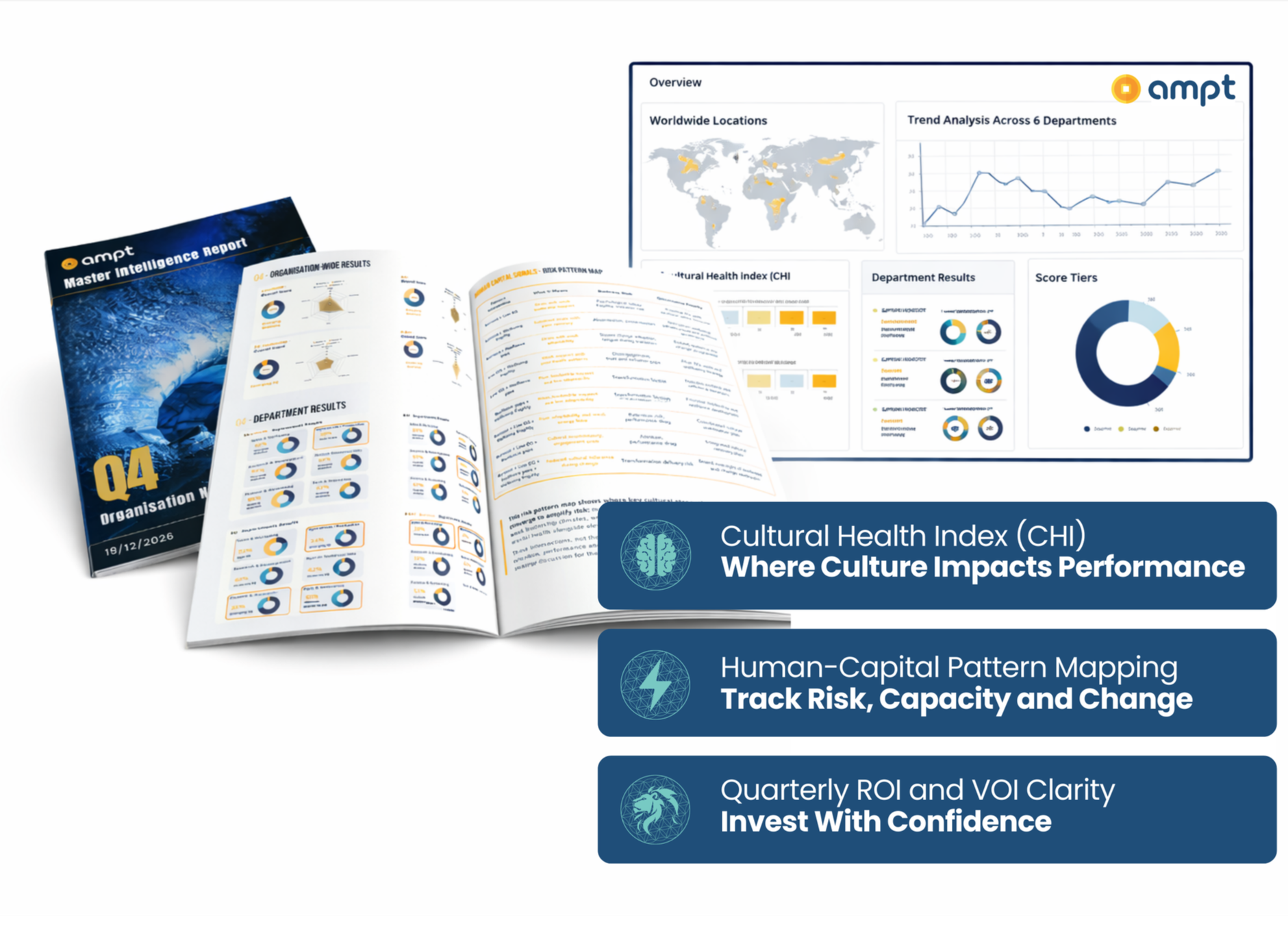
For your leadership.
Board-ready clarity. Decision-ready intelligence reports and the Cultural Health Index (CHI) show where culture is strengthening performance, where risk is building, and what needs attention most.
A repeatable way to track culture. Built for clearer decisions. The Cultural Health Audit gives you a repeatable way to track cultural health quarter by quarter, so decisions around people, priorities, and investment are grounded in real evidence.
Patterns you can act on. The four intelligence layers create a cultural performance engine, revealing the patterns shaping risk, capacity, and performance across the organisation over time.
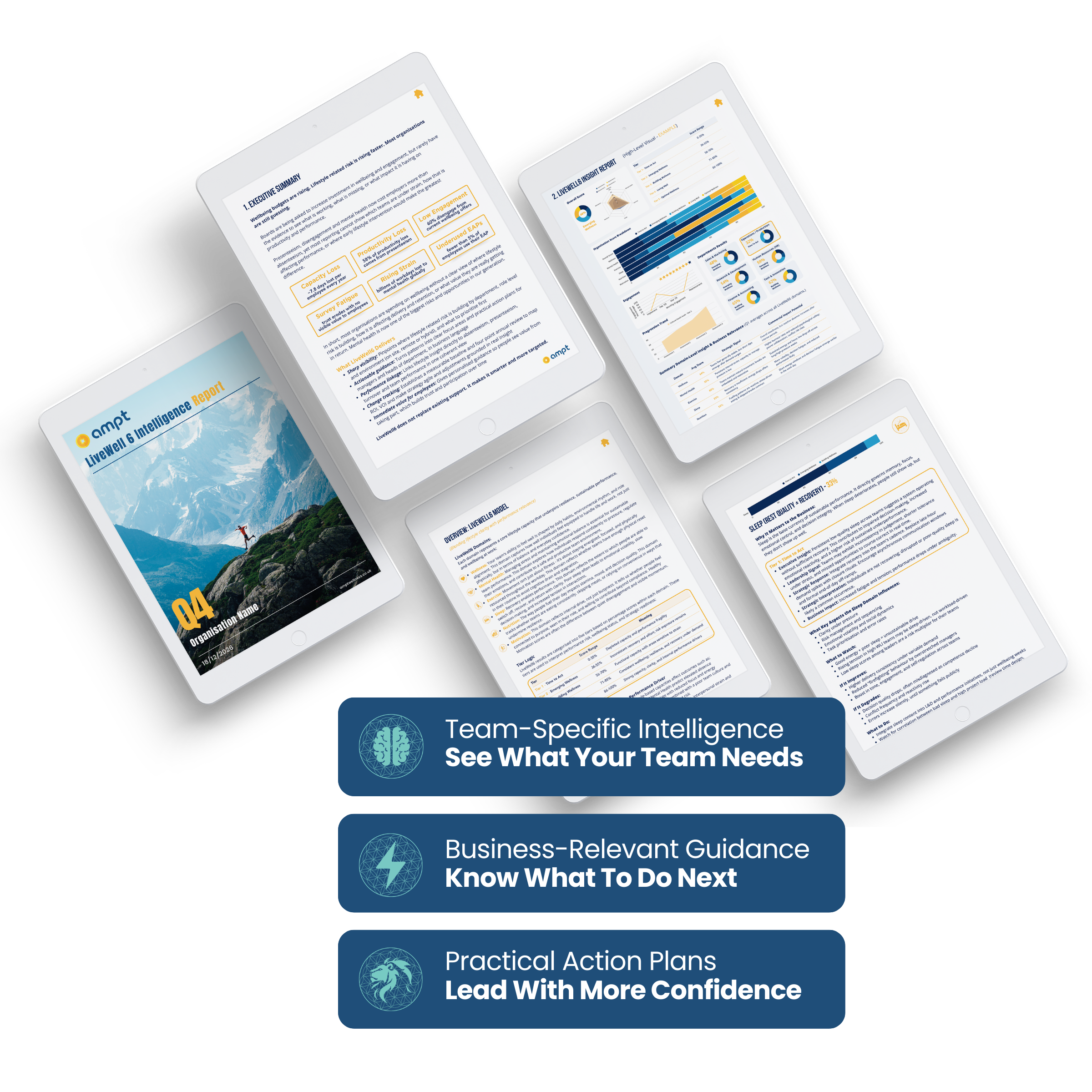
For your managers.
Team-specific intelligence reports turn people signals into business-relevant guidance, so managers can understand what is happening in their teams and adapt how they lead in response.
Built to remove guesswork. Managers do not need to become wellbeing experts, and HR does not need to bridge the gap between survey indicators, team action, and leadership reporting.
Viewed together, these reports reveal the patterns shaping team culture, helping managers adjust how they lead, respond earlier to pressure points, and support performance with greater confidence.
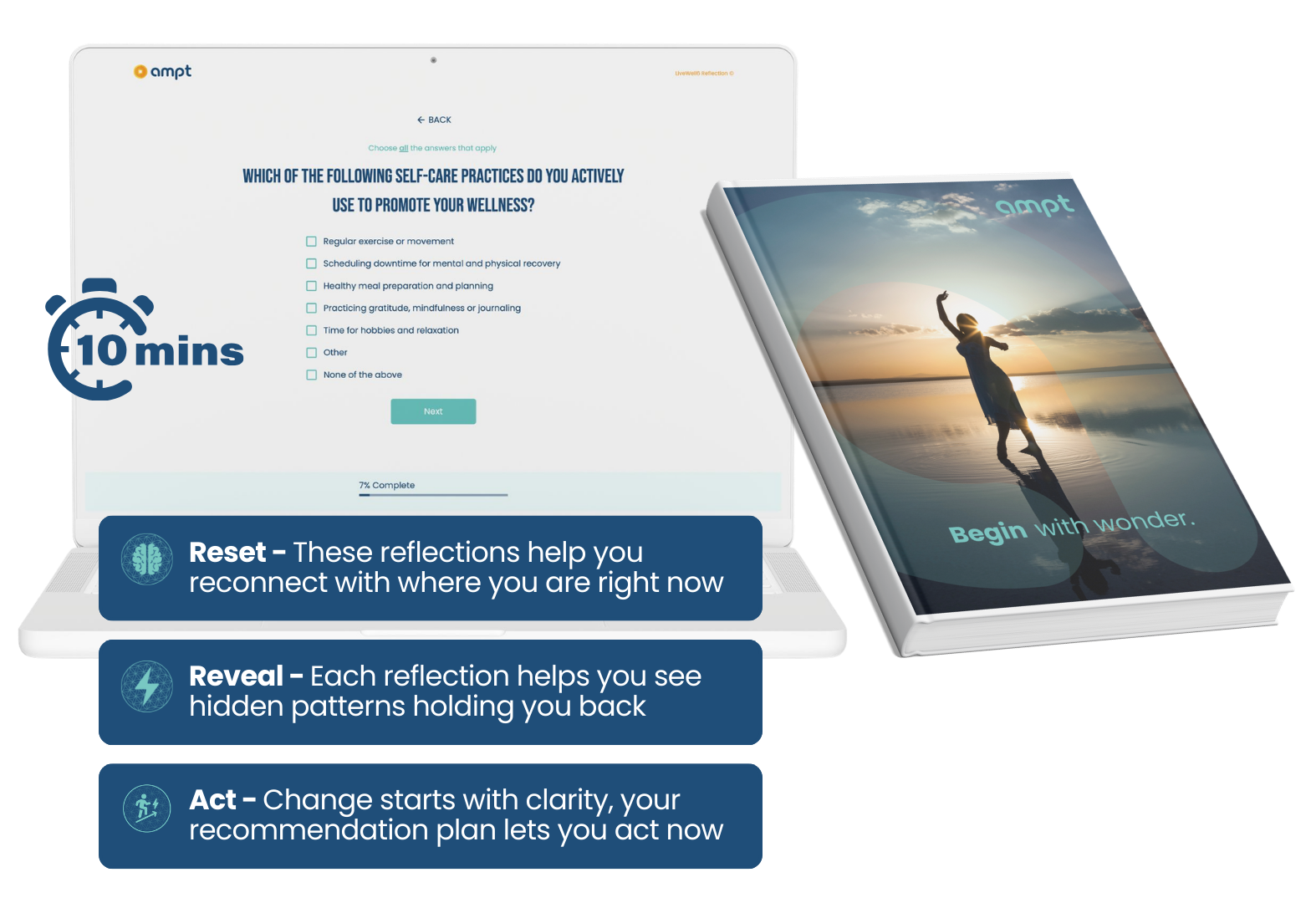
For your people.
Personalised reports and expert-led recommendation plans based on each person’s results, with ongoing learning opportunities.
Built to earn trust, not create survey fatigue. Each reflection gives people something useful back immediately: clear insight, relevant next steps, and guidance tailored to where they are now.
Together, the four reflections work like a digital journal, helping people see what supports them, what quietly drains them, and what to do next to improve wellbeing and performance over time.
What this makes possible.
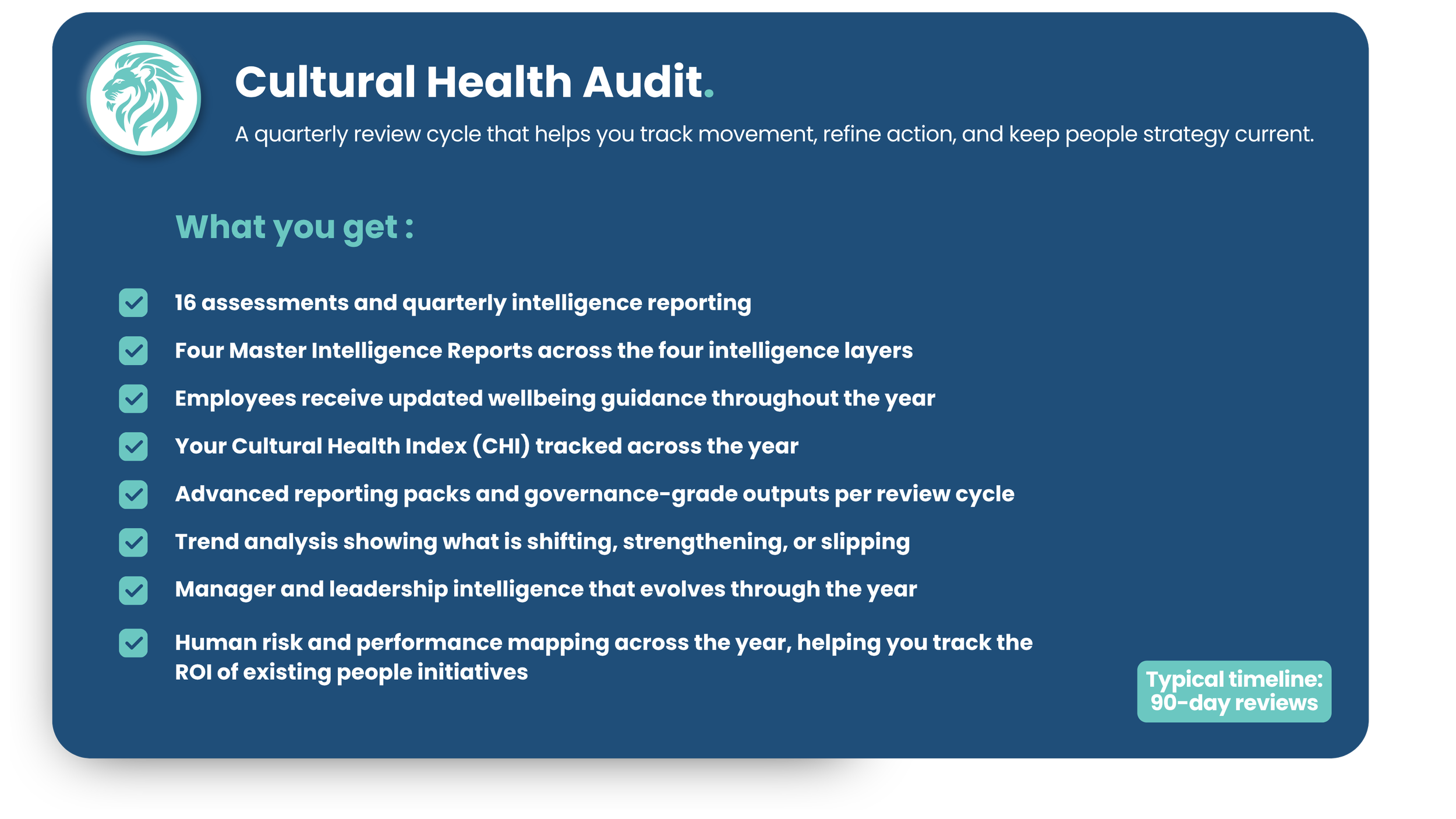

Organisations choose Ampt
to leave people stronger and shape futures people can believe in.
FAQs about Ampt
-
The Ampt Cultural Health Audit is a structured culture, wellbeing and performance diagnostic that brings together data from Ampt’s four Wellbeing Intelligence Layers into one clear view of organisational cultural health.
It helps leadership identify where risk is building, what is working, and which priorities and initiatives to invest in to strengthen culture and performance over time.
-
The Cultural Health Baseline is a one-off audit of organisational cultural health. It gives organisations a clear point-in-time profile across all 21 domains and four Intelligence Layers. It is a strong starting point.
As organisations move into the full quarterly review cycle, behavioural patterns become measurable through trend analysis, human capital risk becomes identifiable, and the ROI of culture and wellbeing initiatives can be more clearly mapped.
-
Most tools stop at collecting feedback, surfacing scores, or showing dashboards. Ampt goes much further. It is a next-generation value engine that turns culture, wellbeing, and performance data into clear intelligence for every level of the organisation.
That means employees do not just give feedback into a black hole. They receive highly personalised recommendation plans. Managers receive practical business action plans, without needing to become wellbeing experts. Leaders receive decision-ready priorities through the Master Intelligence Report. HR is not left trying to interpret fragmented signals or stitch the story together manually.
What makes Ampt different is that it:
supports proactive intervention with guardrails, allowing organisations to act earlier, before risks escalate
builds trust, because people receive immediate value and can see their input supporting both themselves and their colleagues
saves time for HR and leadership, because the intelligence is already translated into action and priorities
reduces fragmentation, by bringing culture, wellbeing, and performance into one joined-up system
supports better decisions, by showing which levers to pull, where to focus first, and where investment is most likely to create return, while avoiding unnecessary spend
tracks what changes over time, so organisations can see progress, prove value, and improve with more confidence
In short, Ampt does not just measure culture. It helps organisations act on it, prove what is working, and create more value from every signal they collect.
-
Yes. You do not have to begin with the full Cultural Health Audit.
Some organisations start with a single intelligence layer pilot because they want to focus on one challenge first, test engagement, or build internal confidence before taking a broader view. Others go straight into the full audit because they want a joined-up picture across culture, wellbeing, and performance from the outset.
Both routes are valid.
What matters is choosing the strongest starting point for your goals, level of urgency, and organisational readiness. We help you decide where to begin, without forcing a bigger route than you need.
In practice, starting with one intelligence layer allows you to:
focus on a priority area first
gain meaningful insight without overcomplicating rollout
create early traction and internal buy-in
build towards the full Cultural Health Audit over time, if and when it makes sense
In short, yes: you can start with one intelligence layer first. The model is designed to be flexible, so organisations can begin in the right place and grow from there.
Take the Culture Priority Check to see your best fit.
-
Our pricing is designed to reflect the route you choose, the scale of the organisation, and the level of insight or support required.
That means pricing can vary depending on things like:
whether you begin with one intelligence layer or the full Cultural Health Audit
the number of people, teams, or divisions involved
whether the focus is a one-off baseline, a quarterly review, or a broader ongoing approach
whether any customisation, additional support, or deeper reporting is needed
What we do not do is force organisations into a one-size-fits-all model that ignores context.
What clients tend to value is that the pricing is tied to clear outcomes: better visibility, stronger prioritisation, more useful outputs at each level, and a clearer basis for action and investment.
In short, the pricing is shaped around scope, scale, and the strongest starting point for your organisation. We can talk you through the best-fit route and the commercial options clearly.
-
Organisations get far more than data collection or a dashboard. They get intelligence translated into action at every level of the business.
Ampt captures what is happening across individuals, teams, divisions, and the wider organisation, then turns those signals into practical outputs that people can actually use.
For employees:
Highly personalised recommendation plans for each reflection, giving individuals clearer guidance, greater relevance, and something useful in return for their input.For managers:
Practical business action plans, supported by intelligence reports for each layer, so managers can respond with more clarity, consistency, and confidence, without needing to become wellbeing experts.For leaders:
The Master Intelligence Report each quarter, alongside reports for each intelligence layer. Up to 20 reports per year, giving leadership a decision-ready view of what is shaping performance, where pressure is building, what deserves attention first, and where action is most likely to create value.Organisations also gain:
a clearer baseline for cultural health
stronger visibility across culture, wellbeing, and performance
prioritised intelligence, not just fragmented signals
a stronger basis for intervention, investment, and decision-making
a clearer way to track what is changing over time
In practice, organisations get clearer priorities, more useful outputs, less interpretation burden on HR, and a much stronger route from signals to action.
A slightly stronger opening line, if you want more punch:
Organisations get far more than data collection or a dashboard. They get a joined-up intelligence and action system.
-
Ampt goes beyond surveys. Traditional surveys often collect input without giving employees much in return. Ampt creates an immediate feedback loop that makes input more useful for both employees and the organisation.
Immediate value: employees receive personalised feedback straight away
Right support at the right time: organisations can signpost people to relevant internal support and existing initiatives
Stronger participation: trust improves when input leads to something tangible
Better organisational insight: leadership gains clearer intelligence on culture, wellbeing and performance